Webb finds a "little red dot" just 450 million years after the Big Bang: possibly one of the earliest black holes
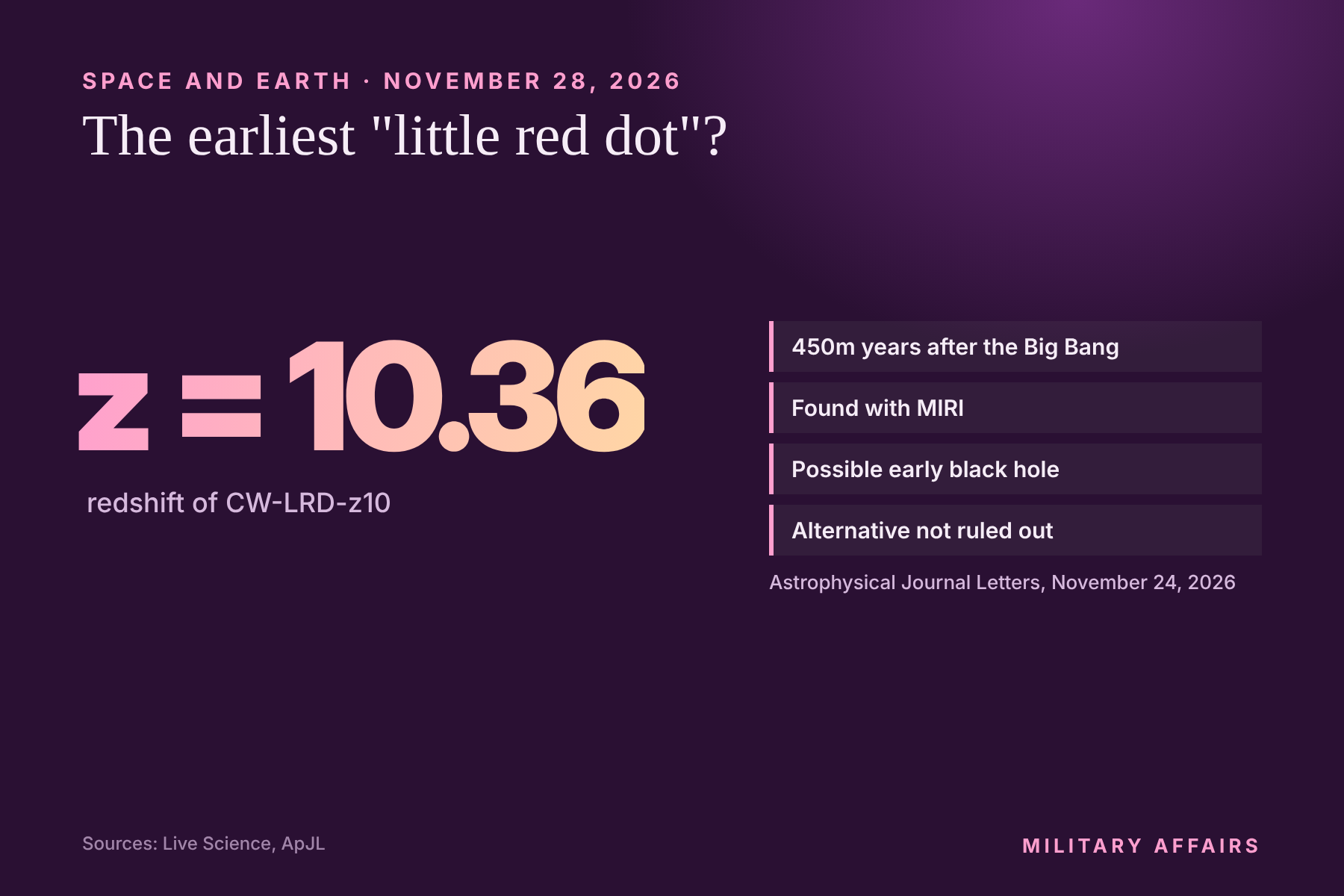
Astronomers using the James Webb Space Telescope (JWST) have spotted a tiny, extremely red object that existed just 450 million years after the Big Bang, Live Science reports. The object, called CW-LRD-z10, may be a "little red dot," a mysterious class of objects many researchers think are black holes growing inside dense cocoons of gas. If confirmed, it would be the earliest known example.
"Such an object would be one of the most distant accreting black holes known," Roberto Maiolino, professor of experimental astrophysics at the University of Cambridge, who was not involved in the study, told Live Science. The study was published November 24 in the Astrophysical Journal Letters.
Mid-infrared beyond the camera
Little red dots were discovered only thanks to JWST. Its near-infrared camera sees objects out to a redshift of about 9, so in 2025 the team also used the mid-infrared instrument (MIRI) to search for even more distant sources. CW-LRD-z10 was the only candidate the search turned up, said first author Takumi Tanaka of the University of Tokyo; its measured redshift is 10.36. Researchers, however, cannot yet rule out a very different explanation.
Sources and references
- I.Live ScienceJames Webb telescope discovers earliest little red dot candidate yet, just 450 million years after the Big Bang🔗 https://www.livescience.com/space/astronomy/james-webb-telescope-discovers-earliest-little-red-dot-candidate-yet-just-450-million-years-after-the-big-bang
Keep reading
Selected long reads to continue with.
 LONG READ
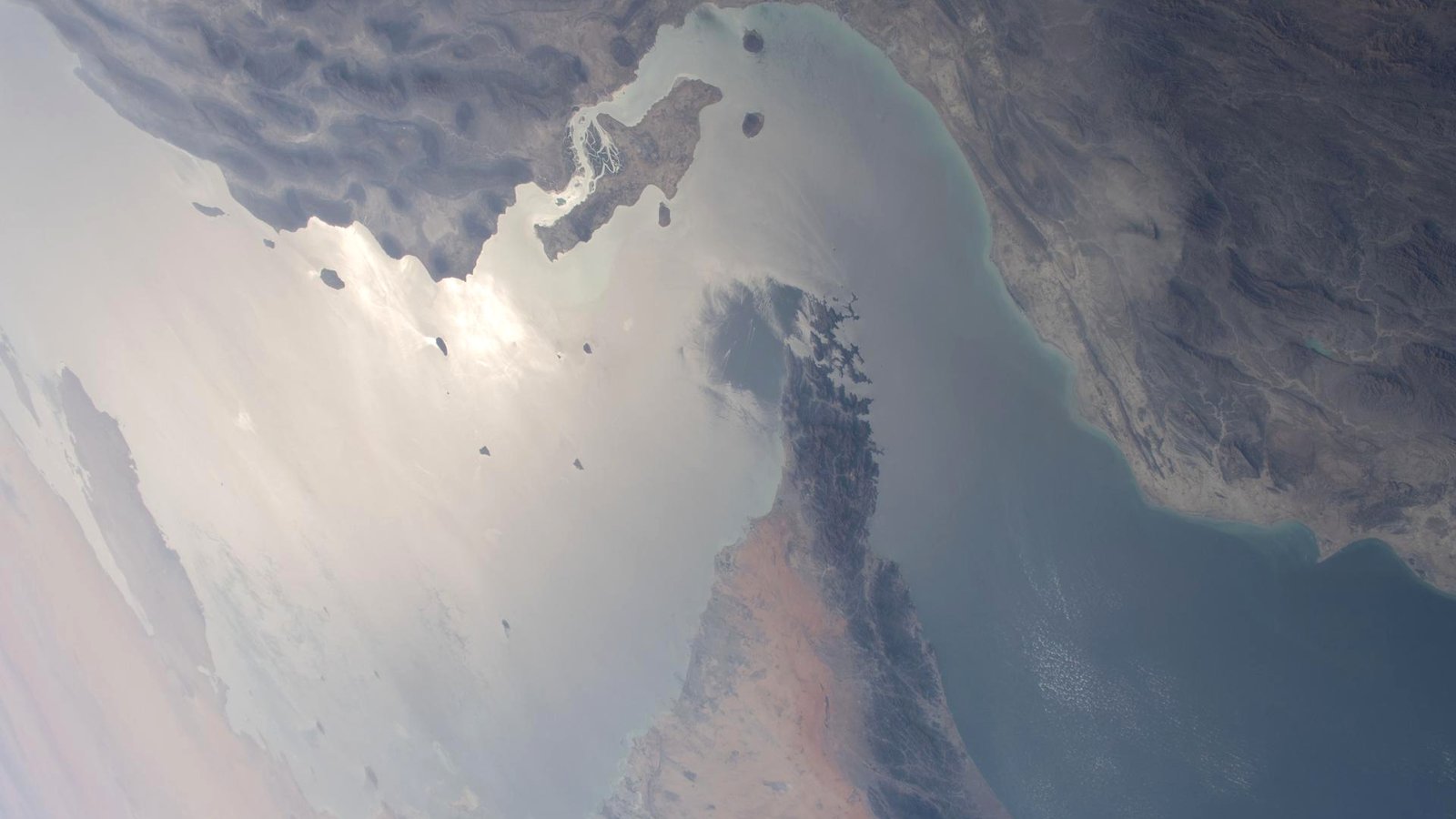
Hormuz, the Red Sea and the Baltic: how freedom of navigation became a spoil of war, and why oil is still getting cheaper
 LONG READ
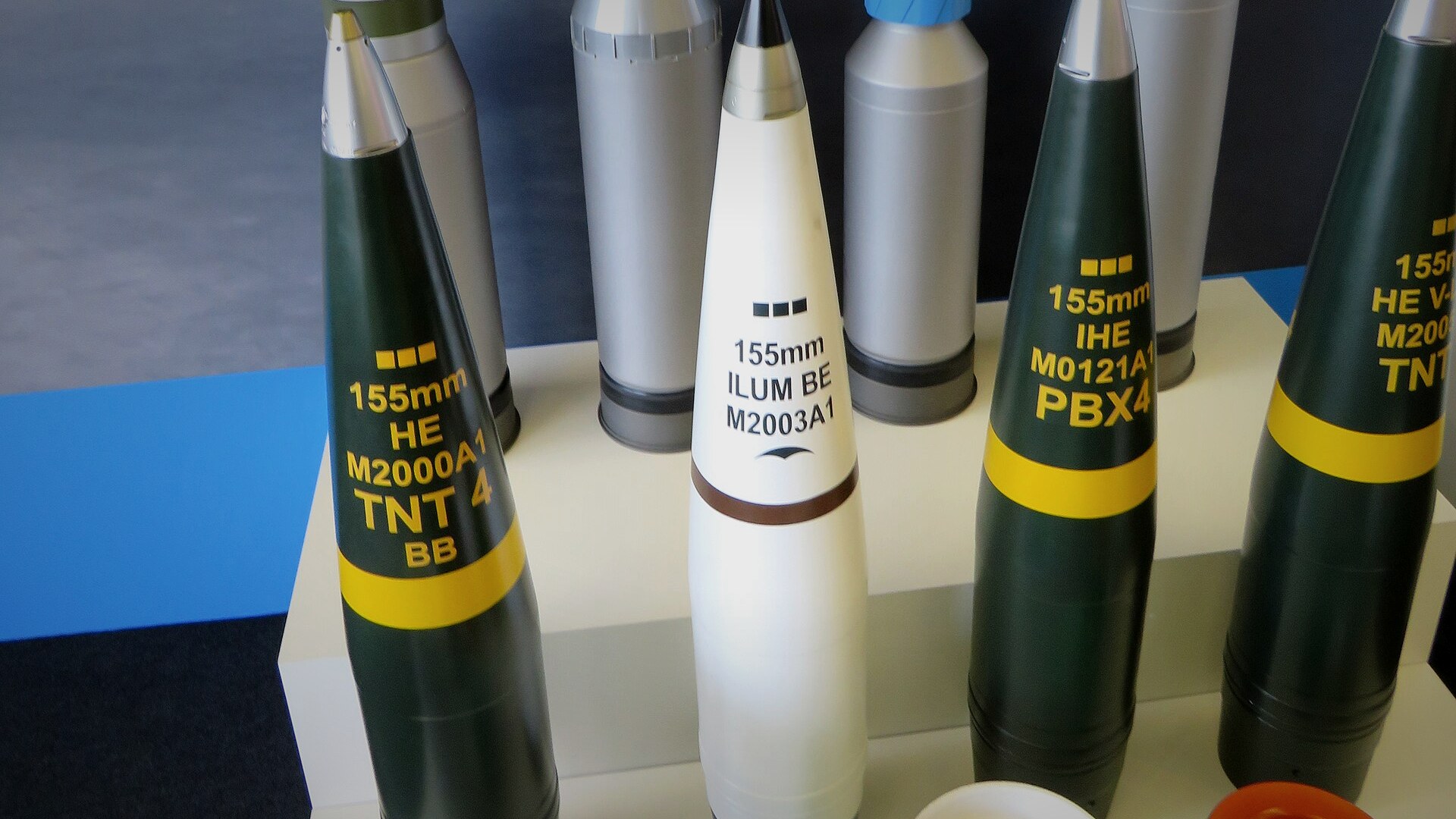
Europe's war reindustrialisation: how the continent is returning to arms factories and where the shift is heading
 LONG READ
After Shenzhen: what Trump, Xi and Putin achieved at the round table, and what stayed behind closed doors
 LONG READ
Comments 0
No comments yet.