Shenzhen: the first Trump–Xi–Putin meeting and the limits of the big three
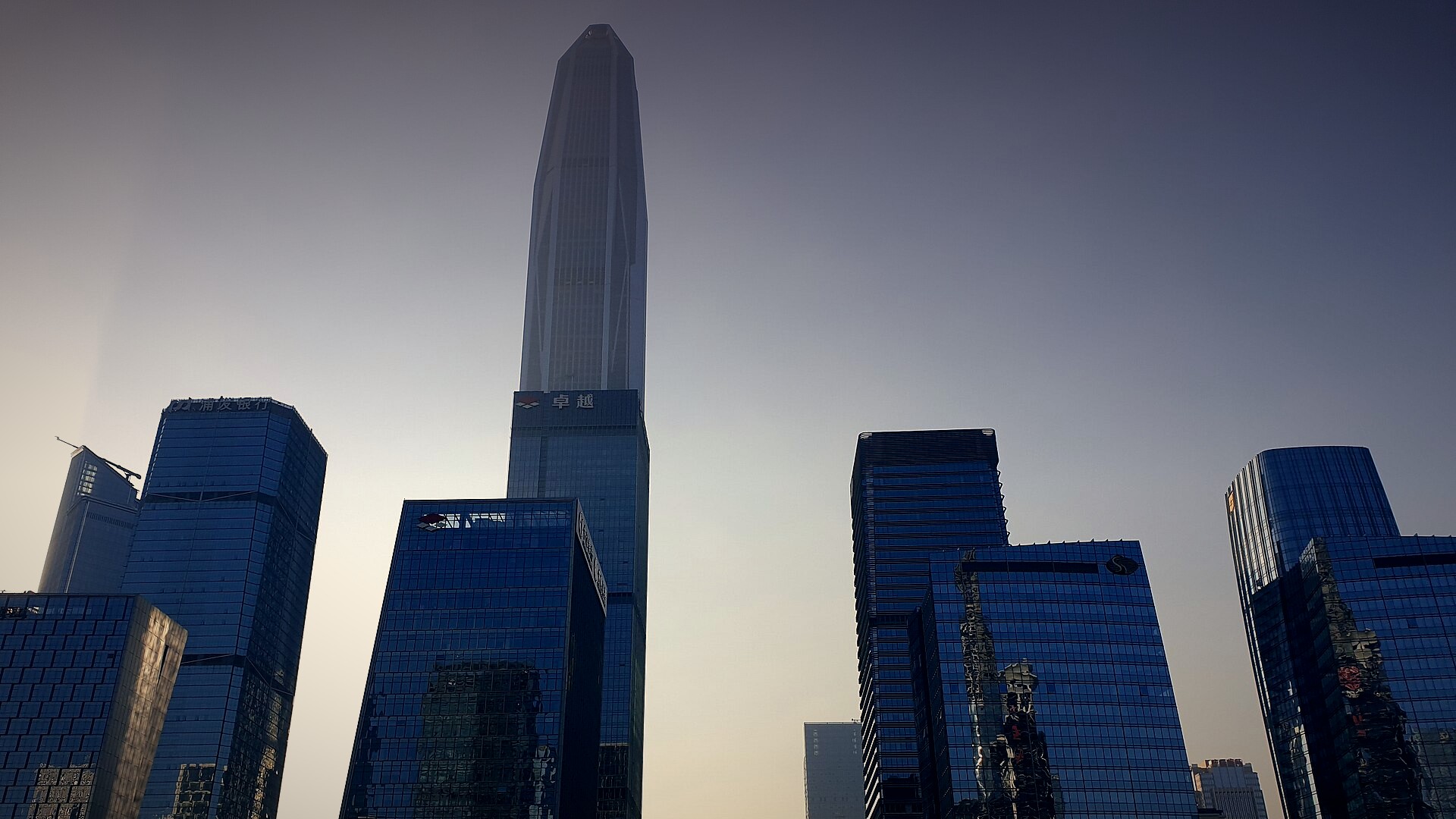
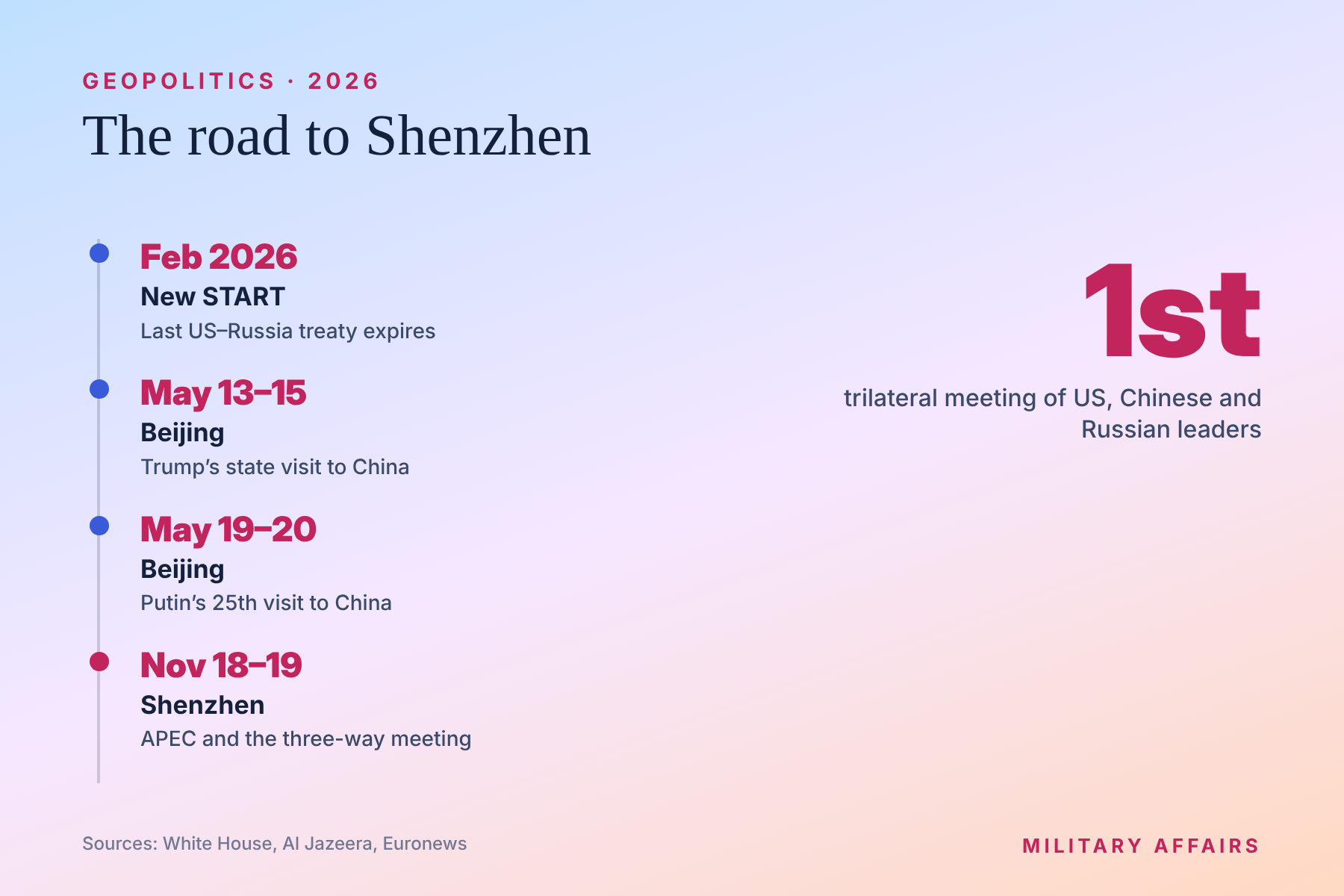
US President Donald Trump, Chinese President Xi Jinping and Russian President Vladimir Putin will meet next week in Shenzhen, on the sidelines of the Asia-Pacific Economic Cooperation (APEC) summit, the White House has confirmed, Al Jazeera and Euronews report. It will be the first trilateral meeting of the leaders of the three largest nuclear powers. The APEC leaders' summit takes place on November 18–19, and the New York Post reports that the three-way meeting is set for Thursday, November 19. An official schedule has not been released.
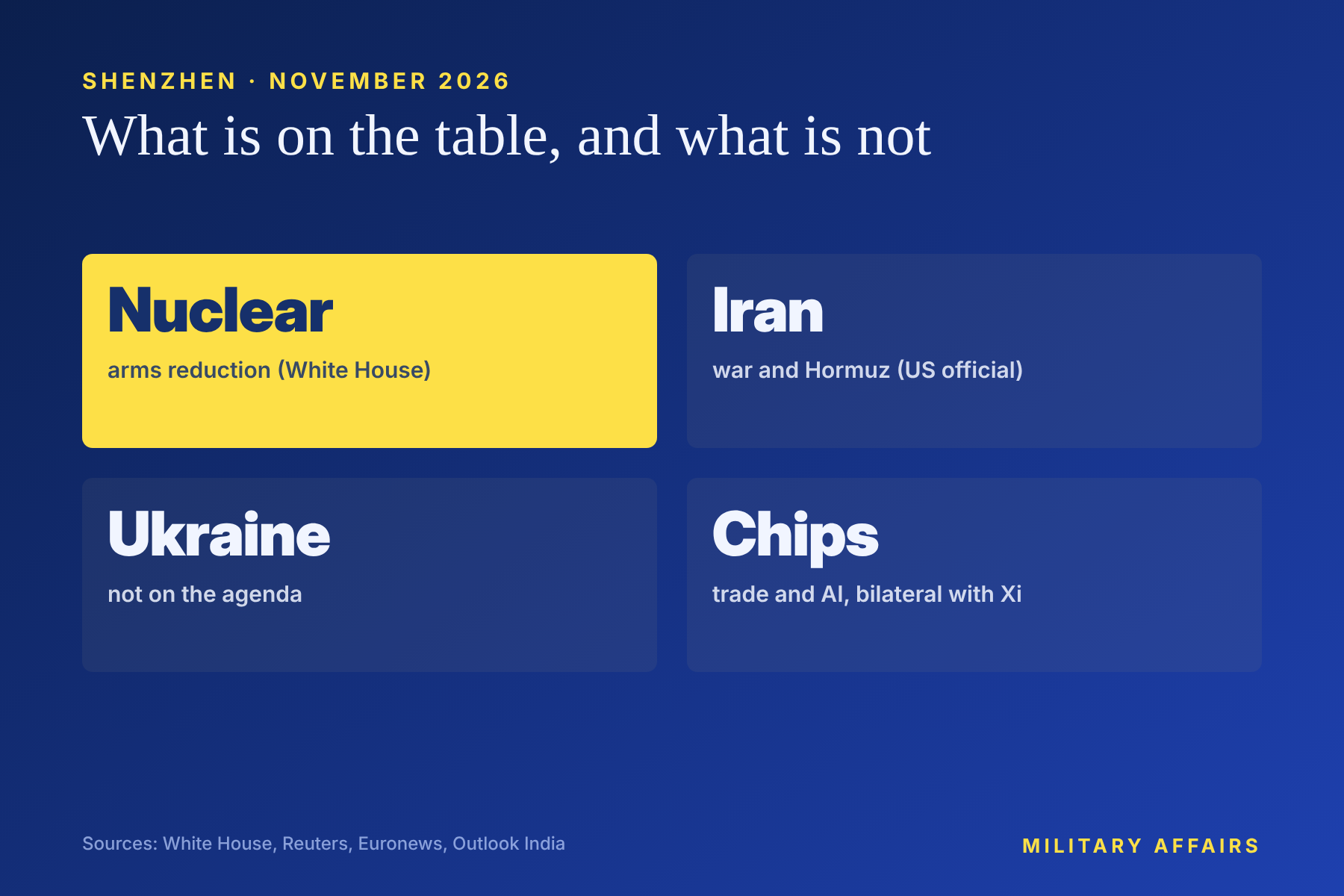
White House assistant press secretary Olivia Wales said the president "will discuss the reduction of nuclear weapons in the world" among other topics, because such proliferation, in Trump's view, is "very dangerous". An unnamed senior official told Reuters: "We do not expect to get to any kind of agreement."
What is confirmed, and what is not
The venue, the format and two topics are confirmed: nuclear arms and, according to US officials, the war with Iran. Ukraine will not be on the table. "China is not really a part of that track, so it doesn't seem appropriate to have the Ukraine discussion there," a US official said, Euronews reports. Trump will also hold a bilateral meeting with Xi, while a separate meeting with Putin is not currently scheduled, according to The Week.
From Moscow, according to Al Jazeera, Kremlin spokesman Dmitry Peskov called the meeting "extremely significant" but rejected comparisons with Yalta: agreements reached in Shenzhen "cannot be imposed on others". Beijing has not formally commented on the trilateral format. Foreign ministry spokeswoman Mao Ning said only that China expects "more practical results" from APEC in AI, trade, connectivity and the digital economy.
The empty space after New START
The nuclear theme was not chosen at random. New START, the last remaining treaty limiting US and Russian strategic arms, expired in February 2026. Trump wants "a new, improved and modernized" agreement that would include China, Al Jazeera writes. Beijing has so far refused trilateral negotiations, arguing that its arsenal is not comparable with those of the US and Russia. In May in Beijing, Putin and Xi called the decision to let New START lapse "irresponsible" and criticised the US Golden Dome missile defence plan.
The format itself is therefore a message. For the first time since the end of the Cold War, nuclear arms control could be opened as a three-way rather than a two-way problem. Between opening the topic and a negotiating mandate, however, lie years. A realistic outcome in Shenzhen is agreement to continue talks at expert level, not numbers.
Iran as a common denominator
The second topic, Iran, shows how different the three leaders' interests are. Washington is running a naval blockade and an economic campaign: Secretary of State Marco Rubio argues these days that further military action is unnecessary because the economic pain is "so great". China is the largest buyer of Iranian oil and depends on the Strait of Hormuz, where traffic is about 65 per cent below pre-war levels, according to Britain's UKMTO. Russia has a strategic partnership with Tehran but also benefits from high energy prices.
In May in Beijing, Trump and Xi agreed that "Iran can never have a nuclear weapon", and the International Atomic Energy Agency has just said it does not know where Iran's Isfahan enrichment plant is located. If there is one topic on which the three are united at least in their goal, it is non-proliferation. On the path to that goal, from sanctions and blockade to negotiations, there is no common language.
Ukraine in another room
Leaving Ukraine out is not a sign that it is secondary, but that Washington is keeping separate tracks. The peace process runs through Abu Dhabi, Moscow and Dublin: the latest round agreed the largest prisoner exchange of the war, and according to Zelensky, Europe joins the negotiating team from the next round. For Moscow, Shenzhen is still a gain: an equal seat at the table with the leaders of the US and China, without the Ukrainian question as a condition. For Kyiv and European capitals it is a reason for unease, which Peskov's rejection of "Yalta" only confirms.
Chips, trade and Taiwan
The real substance for Beijing will be in the bilateral part. Trade Representative Jamieson Greer and Treasury Secretary Scott Bessent spoke on November 6 with Vice-Premier He Lifeng, and Greer stressed China's commitments on agricultural purchases, rare earths and critical minerals, Outlook India writes. A new US–China Board of Trade identified $30bn of goods on each side in September for possible tariff preferences, and a bilateral dialogue on artificial intelligence was agreed.
The chip question has gained new weight after Jensen Huang's resignation and allegations of a Chinese intelligence background to his relationship, which Beijing dismisses as a "so-called Chinese spy narrative". Sales of Nvidia H200 chips to approved Chinese buyers, allowed by Trump in December 2025, account for less than one per cent of data-centre revenue, according to Nvidia itself. The symbolism is nonetheless strong: the meeting takes place in Shenzhen, a city that has become synonymous with China's technology industry.
Taiwan remains the topic Xi raises at every meeting as "the most important issue in China–US relations". China–Japan relations have been strained since Prime Minister Sanae Takaichi's remarks on a possible Japanese military role in a Taiwan crisis, and a Xi–Takaichi meeting at APEC is unlikely, according to Kyodo.
Possible outcomes
- A photo and a process. A joint statement on continuing talks on arms control and Iran, without commitments. This is the most likely outcome, consistent with the expectations of US officials themselves.
- A US–China package. The trilateral part remains symbolic, and the real result comes bilaterally: agricultural purchases, rare earths, a framework for chips and AI.
- Divergence. Disagreement over Iran, or a push to open the Ukrainian question after all, turns the meeting into a display of differences. That would weaken the argument that the three-way format is useful.
Assessment
Shenzhen is not Yalta, and that is the most important thing to say about it. The three leaders have neither a shared vision nor a mandate to divide spheres of influence. They do, however, share a problem: a world without a nuclear arms treaty and a war in the Gulf that hits all three economies. The meeting's value will lie in whether it opens a channel that did not exist before. The biggest winner of the format is probably the host: China, which for the first time hosts both Washington and Moscow in its technology hub as a broker rather than a party to a conflict.
Sources and references
- I.Al JazeeraTrump, Xi and Putin to hold first three-way summit in China🔗 https://www.aljazeera.com/news/2026/11/14/trump-xi-and-putin-to-hold-first-three-way-summit-in-china
- II.EuronewsTrump, Xi and Putin to meet in China, White House says🔗 https://www.euronews.com/2026/11/14/trump-xi-and-putin-to-meet-in-china-white-house-says
- III.ABC NewsTrump to meet with Putin and Xi in China next week🔗 https://abcnews.com/Politics/trump-meet-putin-xi-china-week-us-officials/story?id=138128914
- IV.The WeekWhat will Trump, Xi and Putin discuss at their first-ever trilateral meeting?🔗 https://www.theweek.in/news/world/2026/11/14/trump-xi-putin-trilateral-meeting-apec.html
- V.Asharq Al-AwsatFive facts about APEC🔗 https://english.aawsat.com/world/5340766-five-facts-about-apec-trump-putin-and-xi-set-attend
- VI.Yahoo News / New York PostTrump to hold summit with Xi, Putin in Shenzhen on Thursday🔗 https://sg.news.yahoo.com/trump-hold-summit-xi-putin-213210646.html
- VII.Outlook IndiaA new AI dialogue, an old chip war: what Trump and Xi face in Shenzhen🔗 https://www.outlookindia.com/international/trump-xi-shenzhen-summit-nvidia-h200-ai-chips
- VIII.Wikipedia2026 state visit by Donald Trump to China🔗 https://en.wikipedia.org/wiki/2026_state_visit_by_Donald_Trump_to_China
- IX.Wikipedia2026 visit by Vladimir Putin to China🔗 https://en.wikipedia.org/wiki/2026_visit_by_Vladimir_Putin_to_China
- X.Times of IsraelLiveblog November 14, 2026🔗 https://www.timesofisrael.com/liveblog-november-14-2026/
- XI.Gulf NewsTurkey, Qatar sign defence pact; Hormuz risks persist🔗 https://gulfnews.com/world/mena/us-israel-iran-war-turkey-qatar-sign-defence-pact-as-trump-warns-tehran-hormuz-risks-persist-1.500745854
- XII.Interfax-UkraineZelenskyy: Ukraine, Russia to hold largest POW exchange🔗 https://en.interfax.com.ua/news/general/1235889.html
- XIII.Wikimedia CommonsShenzhen Skyline Fuhua Road (Shihu7, CC BY-SA 4.0)🔗 https://commons.wikimedia.org/wiki/File:Shenzhen_Skyline_Fuhua_Road_Ping_An_International_Finance_Center.jpg
Keep reading
Selected long reads to continue with.
 LONG READ
Nvidia on three fronts: a selloff, a spy scandal and China a week before decisive results
 LONG READ
Dodik at Mar-a-Lago: a photo, messages and the limits of lobbying
 LONG READ
Referendum at the gas pump: how the war with Iran cost Trump Congress
 LONG READ
Comments 0
No comments yet.