Hormuz, the Red Sea and the Baltic: how freedom of navigation became a spoil of war, and why oil is still getting cheaper
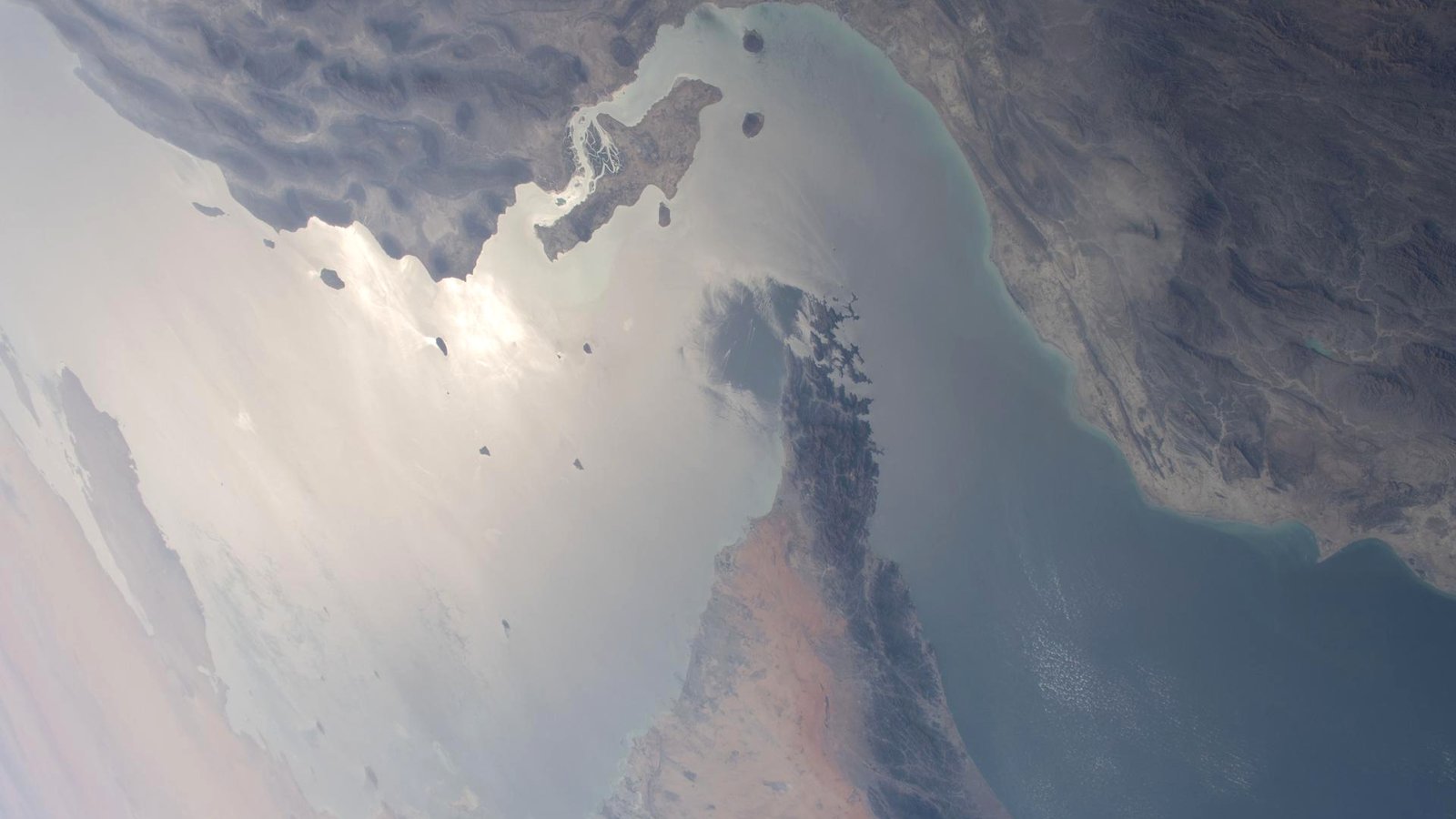
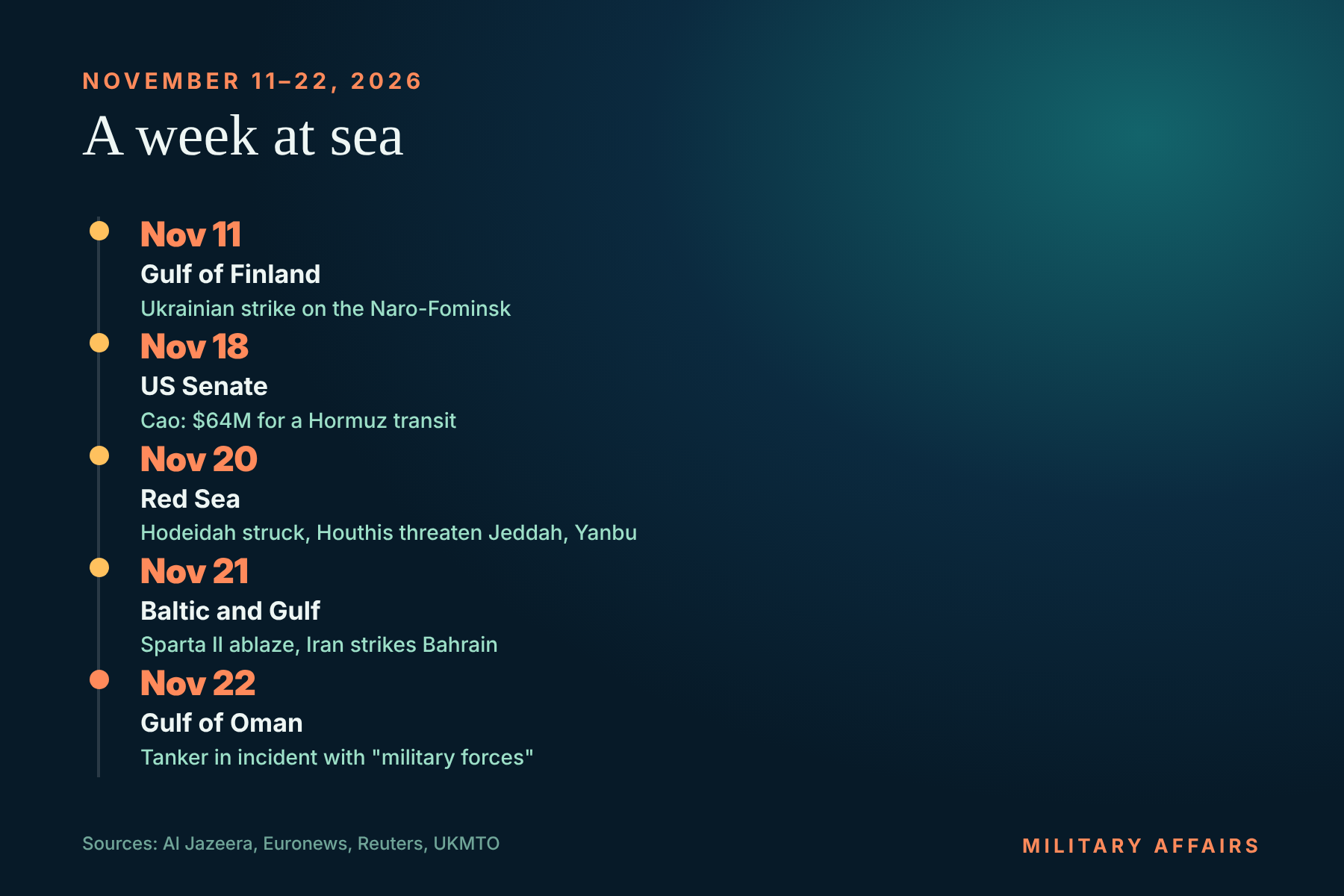
Between November 11 and 22, 2026, Ukrainian drones struck a Russian warship in the Gulf of Finland and then the cargo ship Sparta II bound for Kaliningrad; the Saudi-led coalition struck Yemen's Hodeidah port and the Houthis threatened the ports of Jeddah and Yanbu; Iran attacked Bahrain, and in the Gulf of Oman a tanker was involved in an incident with "military forces" near the US blockade line. None of these events is isolated. Together they show that the war has moved onto the sea lanes, to three chokepoints through which a large share of the world's trade and energy passes.
This analysis follows three fronts, Hormuz, Bab el-Mandeb and the Baltic, and asks the question the numbers raise: how can attacks on tankers be rising while the price of oil falls?
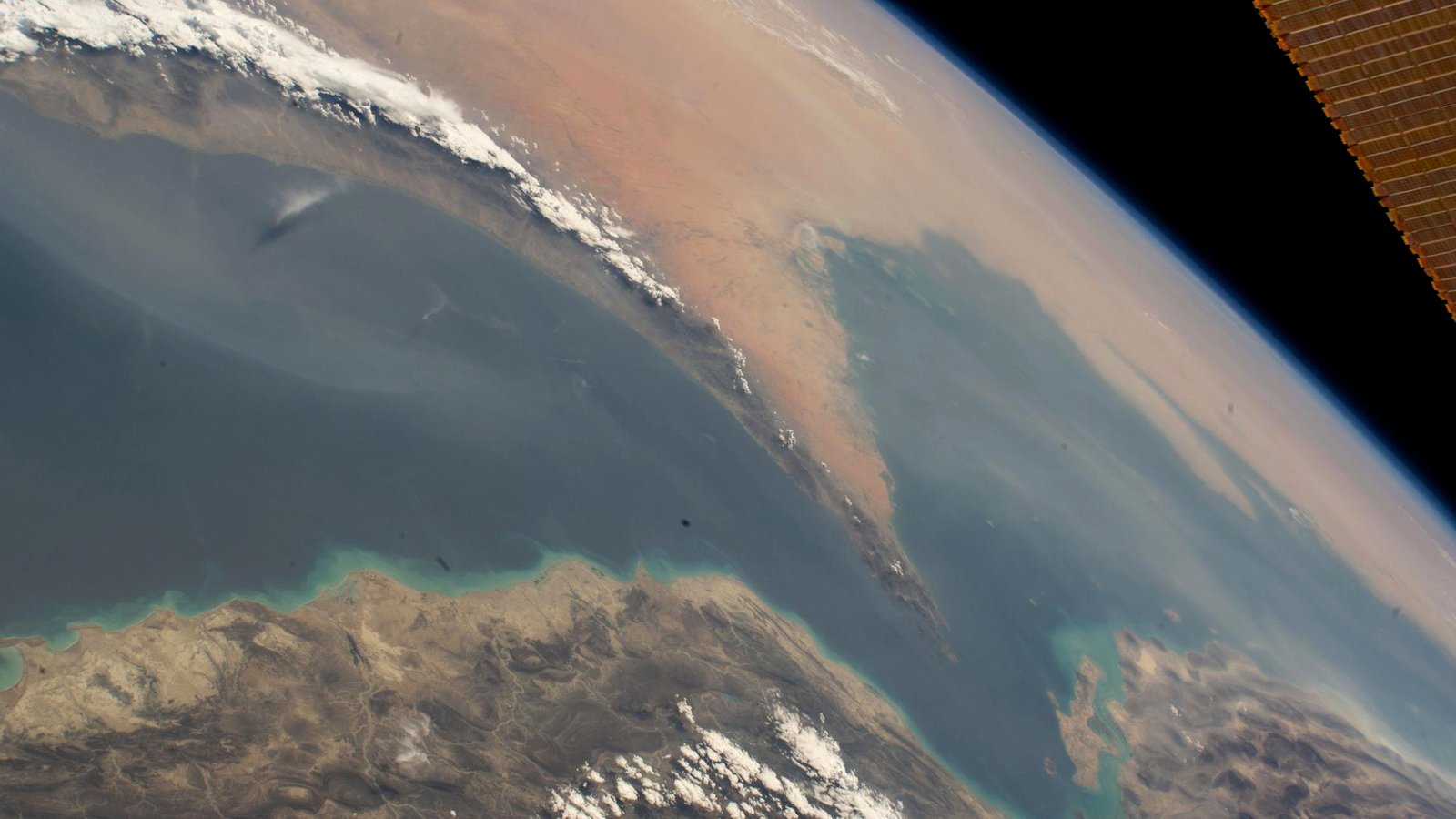
Hormuz: a strait that is "technically open"
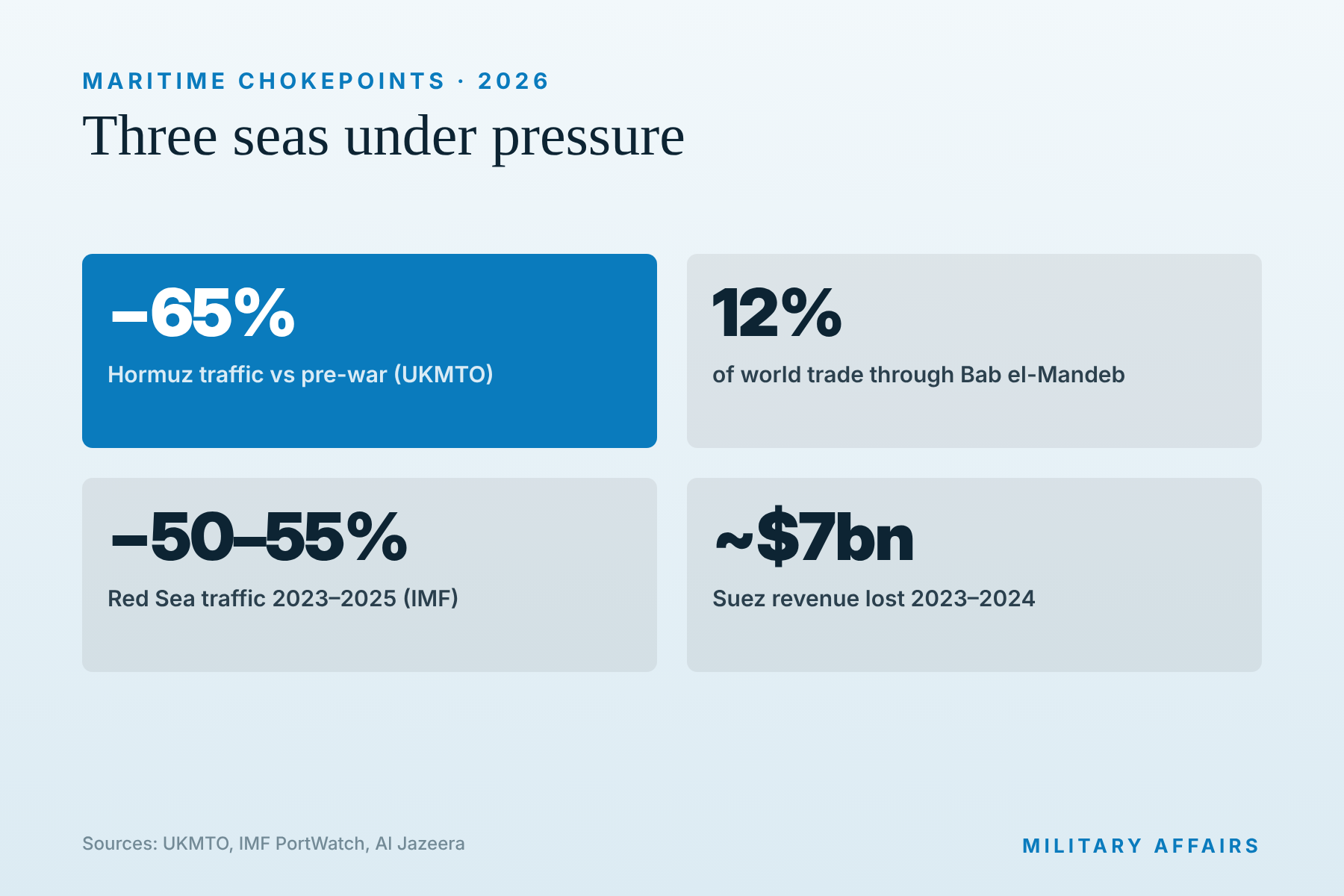
Before the war that began with US-Israeli strikes on Iran on February 28, about a fifth of the world's oil passed through the Strait of Hormuz. According to Britain's UKMTO, traffic in the week to November 18 was about 65 per cent below pre-war levels: 263 transits, down from 308 the week before. Since the war began 106 incidents have been recorded, and from September 30 to November 9, 31 vessels were attacked, with about 19 more in the first 18 days of November, the highest level since the war started.
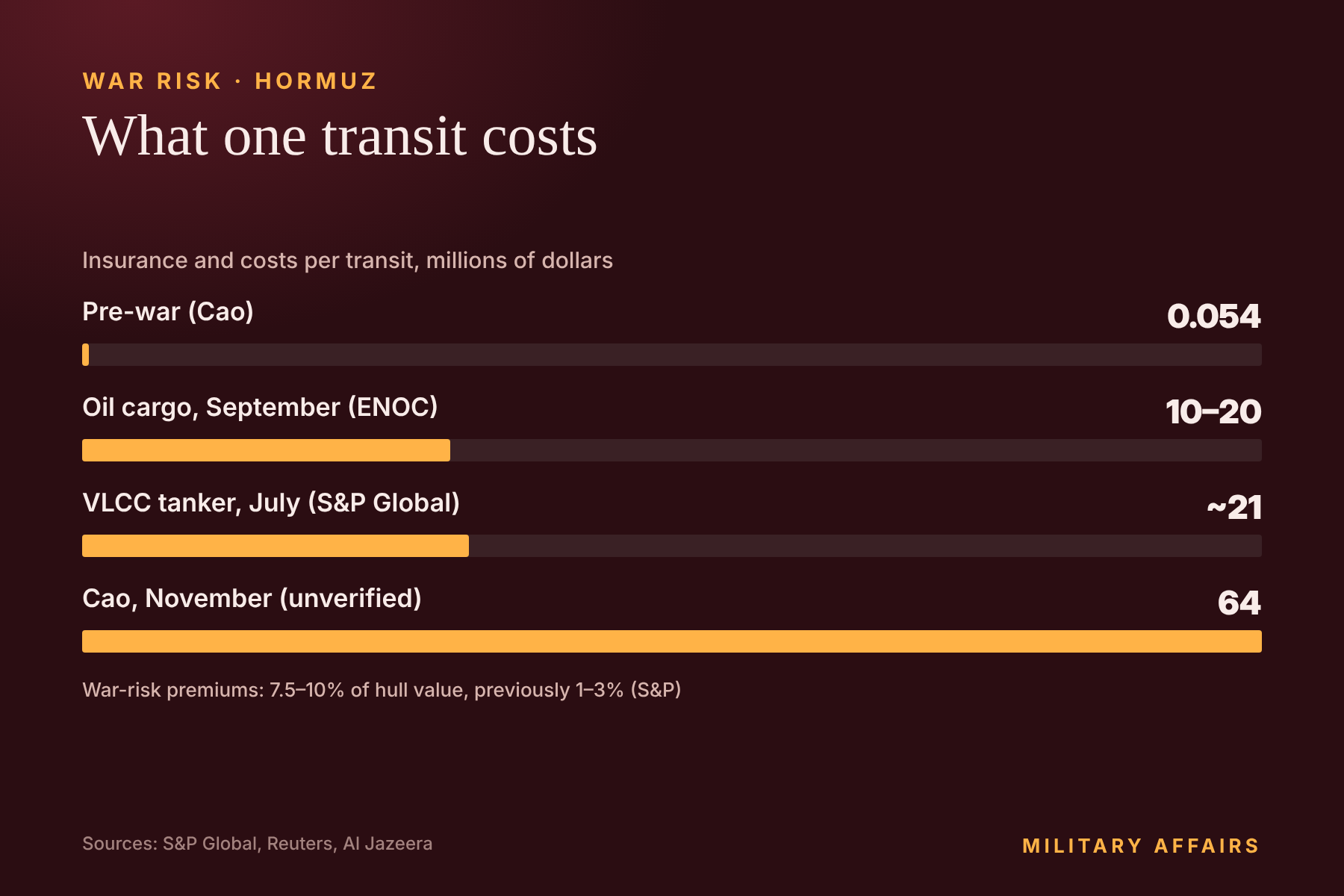
Asked whether the strait is open, Al Jazeera answers: "Technically, yes. But it remains far from fully and freely open as it was before the war." The best indicator is the price of risk. Acting US Navy Secretary Hung Cao told the Senate on November 18 that insurance for a single transit now costs $64 million, against $54,000 before the war. Unconfirmed: nobody has independently verified that figure, and Windward analyst Michelle Bockmann notes that Cao "gave no context". Verifiable data are lower but still dramatic: S&P Global estimated in July that war-risk premiums had reached 7.5 to 10 per cent of hull value, against 1 to 3 per cent previously, or about $21 million for a large tanker, and an executive at Dubai's ENOC told Reuters in September that moving one oil cargo through Hormuz costs $10 million to $20 million.
A second, quieter struggle is under way: the US blockade of Iranian ports. The US says it has lasted 130 consecutive days, and Central Command warned this month that ships taking cargo by ship-to-ship transfer "may be stopped, boarded, diverted, captured". Iran is responding by preparing a convoy: according to Gulf News, more than 14 tankers with crews and Iranian flags are positioned at Kharg Island. The blockade "is an act of war", says Deputy Foreign Minister Kazem Gharibabadi. Andreas Krieg of King's College London told Al Jazeera: "Iran can circumvent parts of the blockade, but it cannot break it militarily in any sustainable way." That is why the November 22 incident near Chabahar, whose participants have not yet been confirmed, may be the first test.
Bab el-Mandeb: the gate of tears in Houthi hands
The second chokepoint is the southern entrance to the Red Sea. In September, according to Al Jazeera, the Houthis took the whole of Yemen's Red Sea coast, including Mocha and Perim island, and stand 20 kilometres from the African coast. About 12 per cent of world trade, 11 per cent of seaborne oil and 8 per cent of liquefied natural gas pass through Bab el-Mandeb. The previous Houthi campaign already showed the cost: according to the IMF's PortWatch, Red Sea traffic fell by 50 to 55 per cent between 2023 and 2025, shipping lines still route around the Cape of Good Hope, adding more than 20 days, and Egypt lost about $7 billion in 2023–2024, roughly 60 per cent of Suez Canal revenue.
Now the front is closer than ever. The Saudi-led coalition struck Hodeidah port on November 20, and the Houthis threatened that the ports of Jeddah, Jizan, Yanbu and King Fahd Industrial Port would become targets. Maritime security expert Alexandru Cristian Hudisteanu warns of a side effect: the diversion of navies towards Hormuz and Bab el-Mandeb has opened space for a resurgence of piracy off Somalia.
The Baltic: the war reaches the Gulf of Finland
The third front is the newest and, for Europe, the most sensitive. On November 11 Ukraine's Security Service struck the small missile ship Naro-Fominsk in the Gulf of Finland, which CEPA analyst Ilya Timtchenko says was the first Ukrainian strike on a Russian ship in a part of the Baltic used by civilian traffic. Ten days later drones set fire to the cargo ship Sparta II, under US sanctions and linked to a logistics firm serving Russia's Defence Ministry; the Finnish military says Ukraine is "likely" behind it, and Prime Minister Petteri Orpo warns: "The war is spilling over into our neighbouring areas."
The Baltic has also become a bargaining chip. According to Bild, as reported by Al Jazeera, Russian negotiators in Abu Dhabi informally sought Finland's exit from NATO, a ban on Alliance bases in the Baltic states and arrangements to guarantee freedom of navigation in the Black Sea and the Baltic. In the Black Sea, Ukraine's collapse of an arch of the Crimean Bridge on November 17 cut the route for ships carrying grain and steel through the Kerch Strait.
The paradox: why oil is getting cheaper
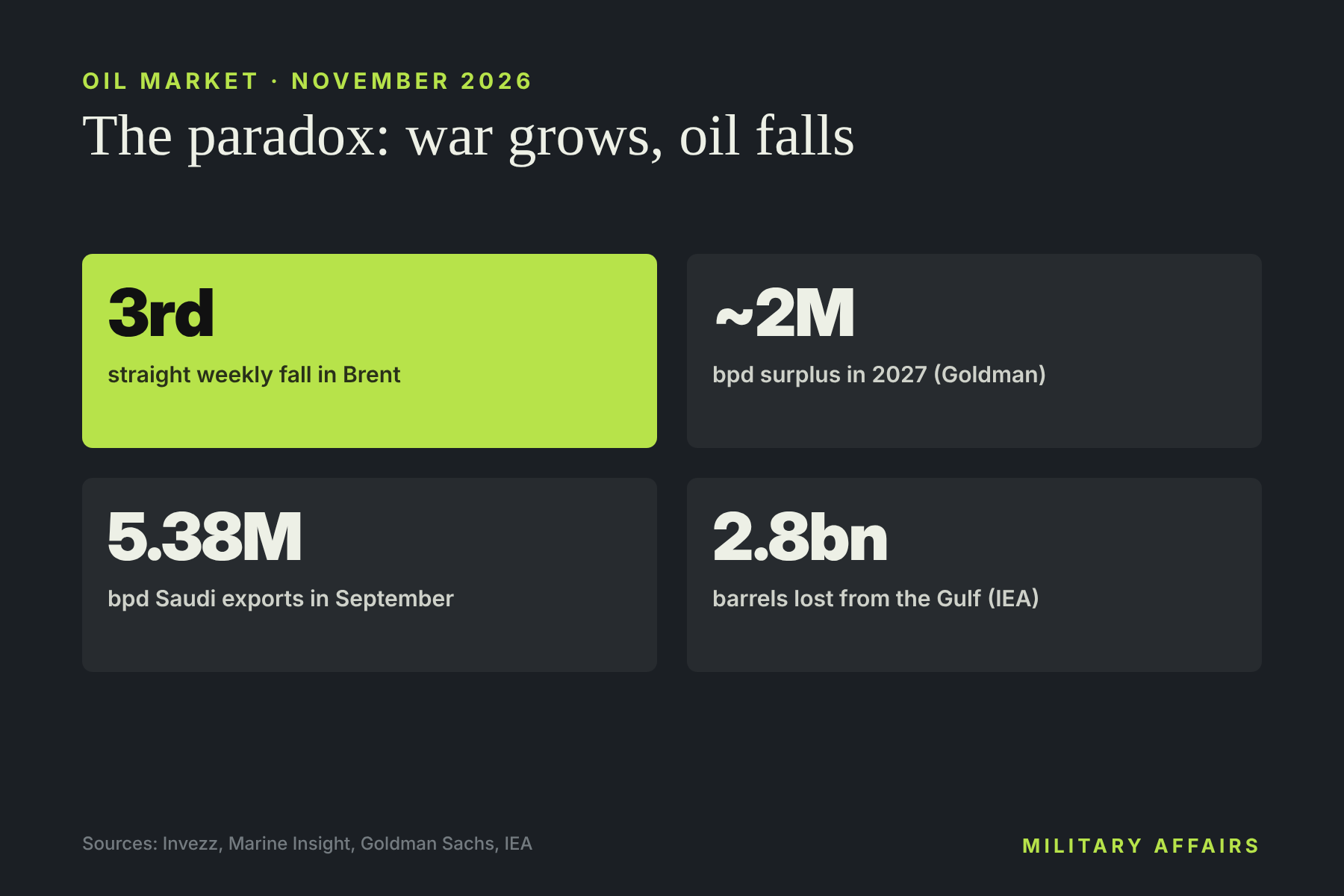
Logic says such a week should lift prices. The opposite happened. Brent fell to $90.06 on November 20 and, according to Marine Insight and Reuters, headed for a third straight weekly loss. Goldman Sachs estimates the market has been in surplus since October and that the surplus will reach about two million barrels a day in 2027, with Brent averaging $88. The explanation is adaptation: according to Goldman researcher Daan Struyven, exporters are increasingly managing disruption through alternative pipelines, escorted shipping and ship-to-ship transfers. Saudi Arabia exported 5.38 million barrels a day in September, almost 21 per cent more than in August.
That does not mean the war is cheap. According to the International Energy Agency, 2.8 billion barrels of oil and 60 billion cubic metres of gas have been lost from the Gulf so far, and Iran is introducing power cuts from Sunday. The cost has simply moved: from the price of a barrel to insurance premiums, freight, longer routes and naval budgets.
Assessment: from free to contested navigation
Four trends emerge from the three fronts:
- Freedom of navigation is becoming a bargaining chip. Iran offers to reopen Hormuz within 48 hours in exchange for talks, Russia seeks "navigation guarantees" in the Baltic and Black Sea, and the Houthis turn Bab el-Mandeb into leverage over Riyadh. A principle treated as a common good is becoming a commodity.
- Risk is being privatised. States no longer guarantee passage; insurers set the price. The gap between $54,000 and tens of millions per transit ends up in the price of fuel, fertiliser and goods.
- Navies are overstretched. Cao told senators the war is "a strain on our navy", the carrier USS George Washington has left the region, and piracy is returning off Somalia as ships are diverted.
- Europe is preparing for an energy war. The European Commission presents a new oil security strategy on December 2, with a focus on military fuel, as Europe imports 27 to 30 per cent of its jet fuel from outside the region.
The coming weeks bring three tests: whether Iran's convoy from Kharg tries to break the blockade and how the US responds; whether the Houthis carry out their threats against Saudi Red Sea ports; and whether the Baltic, after Sparta II, becomes a standing zone of attacks. For now the oil market believes the world will adapt. If the convoy sails and threats become strikes, that assumption will be the first casualty.
Sources and references
- I.UKMTO / Iran InternationalStrait of Hormuz shipping 65% below pre-war levels in mid-November (21. 11. 2026)🔗 https://www.iranintl.com/en/liveblog/202611143682
- II.Al JazeeraUS official says Hormuz insurance hits $64m: Is the strait really open? (18. 11. 2026)🔗 https://www.aljazeera.com/news/2026/11/18/us-official-says-hormuz-insurance-hits-64m-is-the-strait-really-open
- III.Al JazeeraUS targets Iran's ship-to-ship transfers: Can Tehran break the blockade? (20. 11. 2026)🔗 https://www.aljazeera.com/news/2026/11/20/us-targets-irans-ship-to-ship-transfers-can-tehran-break-the-blockade
- IV.Gulf NewsMiddle East war live: Bahrain intercepts Iranian aerial attacks as Hormuz tensions rise (21. 11. 2026)🔗 https://gulfnews.com/uae/middle-east-war-trump-says-iran-wants-deal-but-terms-are-unacceptable-1.500755788
- V.EuronewsTanker incident "involving military forces" reported in Strait of Hormuz (22. 11. 2026)🔗 https://www.euronews.com/2026/11/22/tanker-incident-involving-military-forces-reported-in-strait-of-hormuz
- VI.Al JazeeraRed Sea nations watch as Houthis seize Bab al-Mandeb strait (13. 9. 2026)🔗 https://www.aljazeera.com/economy/2026/9/13/red-sea-nations-watch-as-houthis-seize-bab-al-mandeb-strait
- VII.The NationalSaudi-led coalition targets Houthi weapons smuggling at Hodeidah port (20. 11. 2026)🔗 https://www.thenationalnews.com/news/mena/2026/11/20/saudi-led-coalition-tells-civilians-to-leave-yemens-hodeidah-port-ahead-of-strikes/
- VIII.Al JazeeraWhy is Ukraine attacking Russian warships in the Baltic Sea amid talks? (13. 11. 2026)🔗 https://www.aljazeera.com/news/2026/11/13/why-is-ukraine-attacking-russian-warships-in-the-baltic-sea-amid-talks
- IX.ABC News (Australia) / ReutersRussian cargo ship burns in Baltic Sea after drone strike, crew evacuates (22. 11. 2026)🔗 https://www.abc.net.au/news/2026-11-22/russian-cargo-ship-burns-in-baltic-sea-after-drone-strike/107413782
- X.Al Jazeera'Crimea is turning into an island': How Ukraine hit Putin's prized bridge (18. 11. 2026)🔗 https://www.aljazeera.com/news/2026/11/18/crimea-is-turning-into-an-island-how-ukraine-hit-putins-prized-bridge
- XI.InvezzOil price today: Brent pares losses after sliding to $90.06 amid Hormuz tensions (20. 11. 2026)🔗 https://invezz.com/news/2026/11/20/oil-price-today-brent-pares-losses-hormuz-tensions/
- XII.Marine Insight / ReutersGlobal oil prices rise after reports on Hormuz tanker blasts (20. 11. 2026)🔗 https://www.marineinsight.com/oil-prices-rise-hormuz-tanker-blasts-houthi-riyadh/
- XIII.EuronewsEU puts military fuel needs at heart of new oil security strategy (20. 11. 2026)🔗 https://www.euronews.com/2026/11/20/brussels-puts-military-fuel-needs-at-heart-of-new-oil-security-strategy
- XIV.NASAiss064e046338: The Strait of Hormuz (24. 3. 2021, javno dobro)🔗 https://images.nasa.gov/details/iss064e046338
- XV.NASAiss067e270600: The Strait of Hormuz (18. 8. 2022, javno dobro)🔗 https://images.nasa.gov/details/iss067e270600
Keep reading
Selected long reads to continue with.
 LONG READ
Europe's war reindustrialisation: how the continent is returning to arms factories and where the shift is heading
 LONG READ
After Shenzhen: what Trump, Xi and Putin achieved at the round table, and what stayed behind closed doors
 LONG READ
Shenzhen: the first Trump–Xi–Putin meeting and the limits of the big three
 LONG READ
Comments 0
No comments yet.