Thousands of Kurds take to the streets of Erbil as Baghdad takes over oil and border crossings, and the Kurdish government calls it a return to centralism
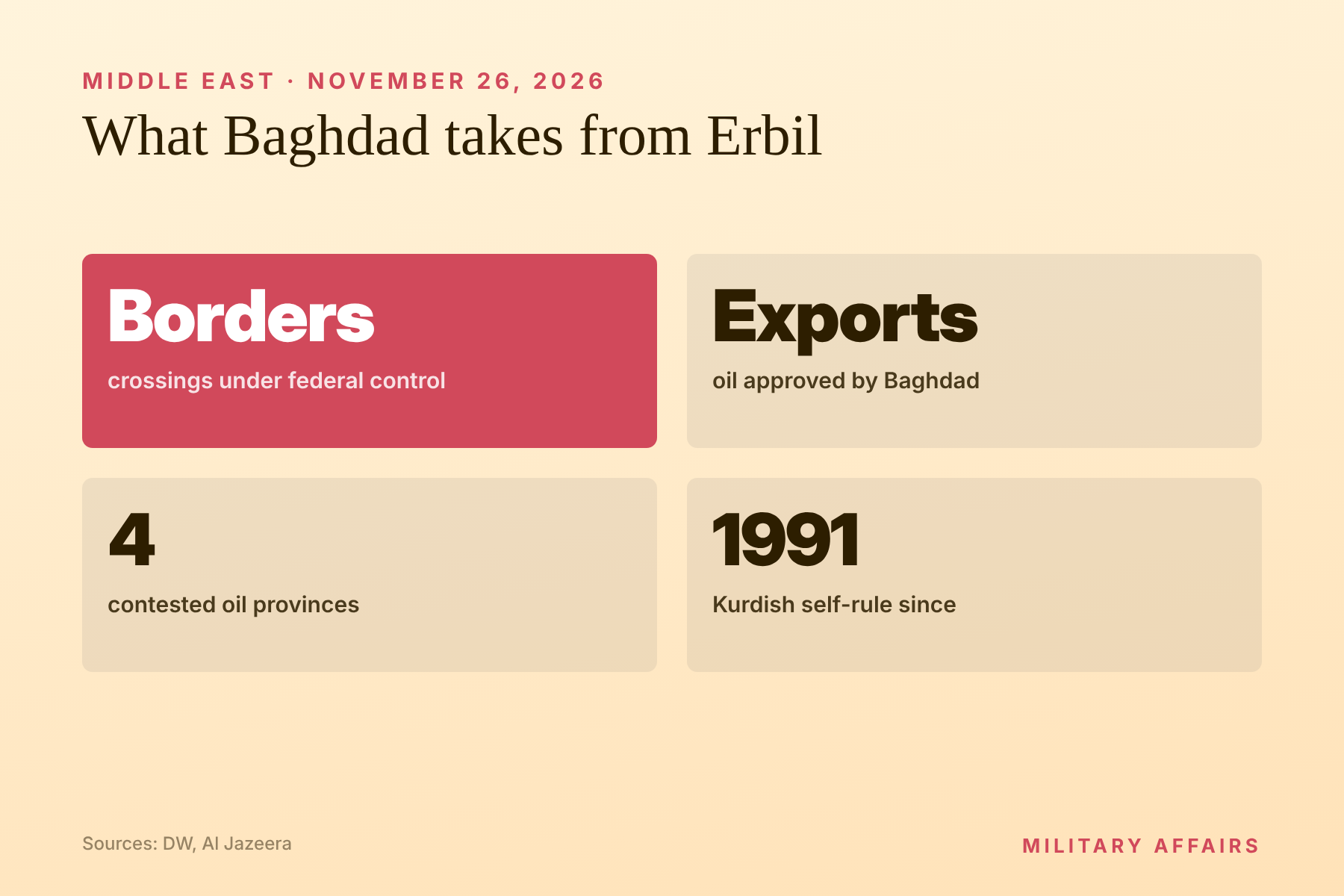
Thousands gathered in Erbil, capital of northern Iraq's semiautonomous Kurdish region, on Thursday to oppose federal government plans to take control of oil operations and border crossings previously run by Kurdish authorities, DW reports. Rival Kurdish parties joined forces for the protests, which were reported to have spread to other towns and cities.
The government's Tuesday decision, backed a day later by the Federal Supreme Court, brings the region's border crossings under federal management, places approval of oil exports from the region under the federal oil ministry, and transfers management of oil fields in four contested provinces, Kirkuk, Diyala, Salahuddin and Nineveh, to Baghdad. Prime Minister Ali al-Zaidi says the aim is to stop oil smuggling.
"An attempt to return Iraq to a centralized regime"
The Kurdistan Regional Government said on Wednesday that Baghdad's decision "violates both the Constitution and the constitutional rights of the Kurdistan region" and represents "an attempt to return Iraq to a centralized regime." The Kurds have largely governed themselves since 1991, and the 2005 constitution formally recognised the region, but Erbil and Baghdad have fought over land, oil and money ever since. Al-Zaidi, who took office this year with Donald Trump's backing, also dismissed Kirkuk's operations commander, DW reports.
Sources and references
- I.DWProtests in Iraqi Kurdistan at plans for government in Baghdad to take over oil, border crossings🔗 https://www.dw.com/en/protests-in-iraqi-kurdistan-at-plans-for-government-in-baghdad-to-take-over-oil-border-crossings/a-80065994
- II.Al JazeeraHow an oil feud is deepening rift between Baghdad and Iraq's Kurdish region🔗 https://www.aljazeera.com/news/2026/11/26/how-an-oil-feud-is-deepening-rift-between-baghdad-and-iraqs-kurdish-region
Keep reading
Selected long reads to continue with.
 LONG READ
Hormuz, the Red Sea and the Baltic: how freedom of navigation became a spoil of war, and why oil is still getting cheaper
 LONG READ
Europe's war reindustrialisation: how the continent is returning to arms factories and where the shift is heading
 LONG READ
After Shenzhen: what Trump, Xi and Putin achieved at the round table, and what stayed behind closed doors
 LONG READ
Comments 0
No comments yet.