Battle of Cambrai 1917: the first mass use of tanks and a lesson the Western Front learned quickly
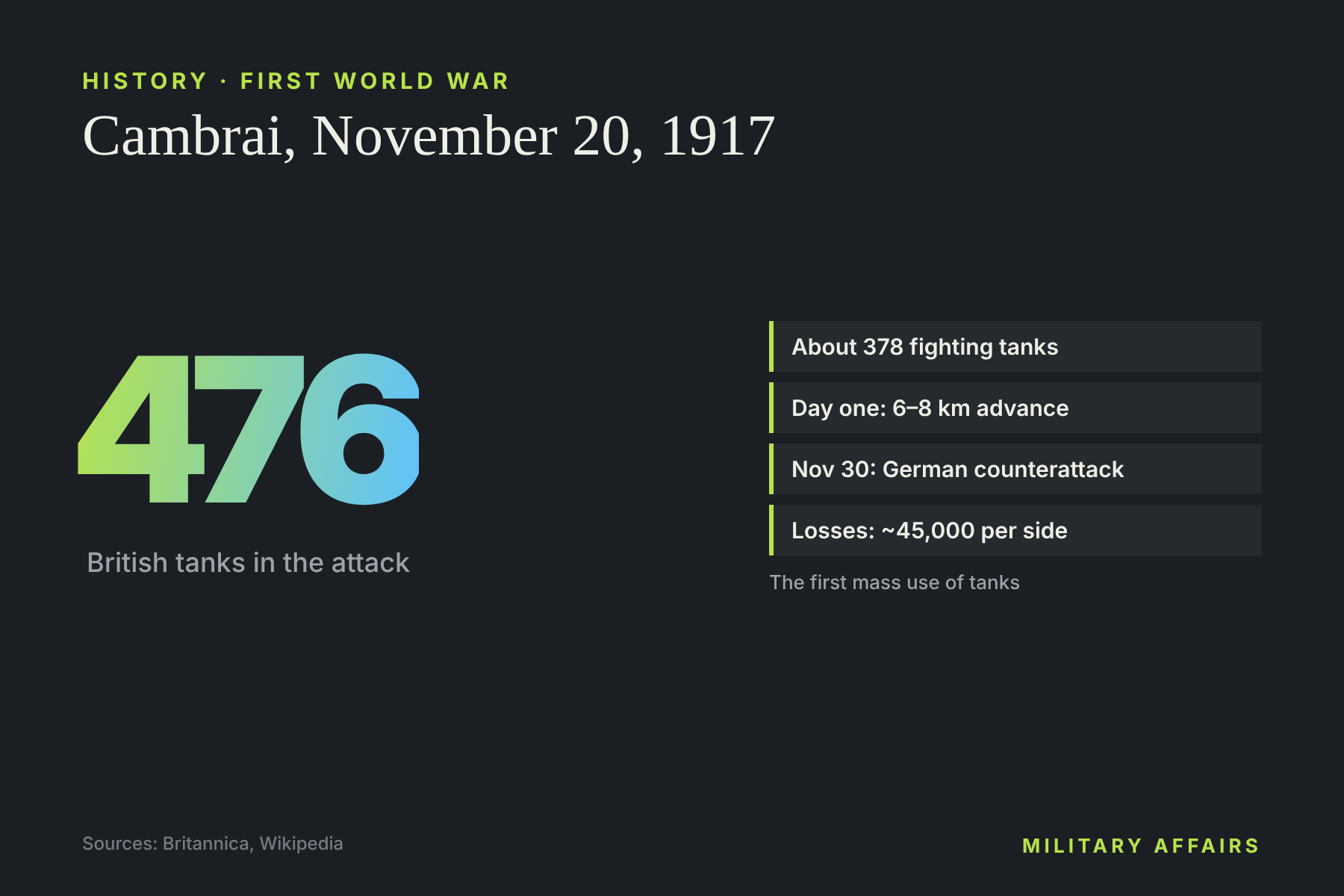
On November 20, 1917, General Julian Byng's British Third Army attacked German positions at Cambrai with about 476 tanks, some 378 of them fighting tanks, according to Encyclopaedia Britannica. It was the first mass use of tanks in the history of warfare.
The attack began without the long preliminary bombardment that had previously given away intentions. Mark IV tanks carrying brushwood fascines to cross the wide trenches of the Hindenburg Line broke through the defences, and British forces advanced about six to eight kilometres on the first day. In Britain, church bells were rung to celebrate a victory for the first time in the war.
The counterattack
The success was not exploited: cavalry could not pass through the breach, and many tanks broke down or were destroyed. On November 30 German forces counterattacked using storm-troop infiltration tactics and retook most of the lost ground. Losses ended up roughly equal, about 45,000 men on each side.
Cambrai showed both lessons that would mark the 20th century: armour combined with surprise can break a fortified front, but a breakthrough without reserves and logistics does not bring victory.
Sources and references
- I.Encyclopaedia BritannicaBattle of Cambrai🔗 https://www.britannica.com/event/Battle-of-Cambrai-World-War-I
- II.WikipediaBattle of Cambrai (1917)🔗 https://en.wikipedia.org/wiki/Battle_of_Cambrai_(1917)
Keep reading
Selected long reads to continue with.
 LONG READ
Shenzhen: the first Trump–Xi–Putin meeting and the limits of the big three
 LONG READ
Nvidia on three fronts: a selloff, a spy scandal and China a week before decisive results
 LONG READ
Dodik at Mar-a-Lago: a photo, messages and the limits of lobbying
 LONG READ
Comments 0
No comments yet.