A siege that endures: Mali between a jihadist blockade and Russian support
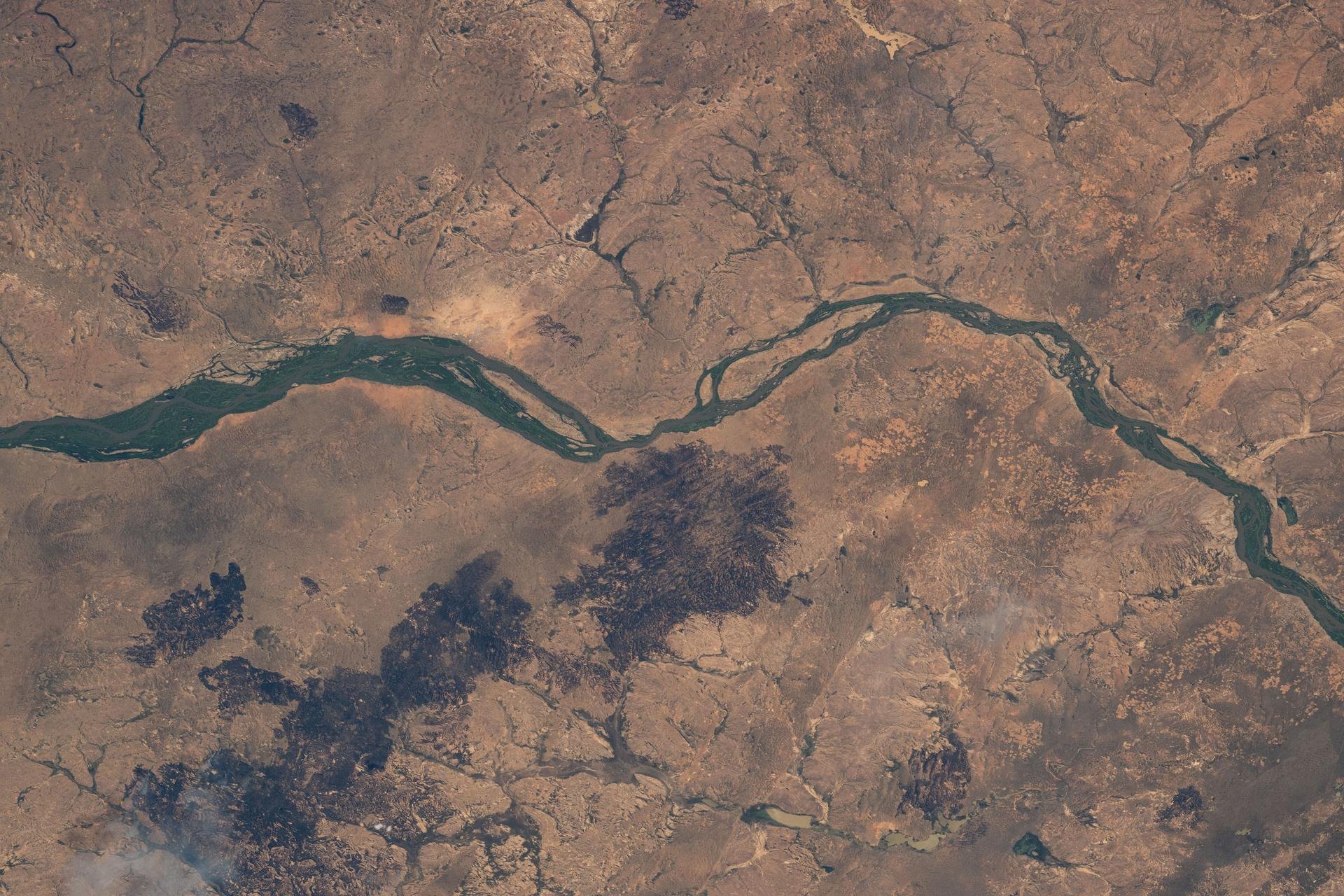
On the morning of April 25, 2026, Jama'at Nusrat al-Islam wal-Muslimin (JNIM), al-Qaeda's Sahel affiliate, and the Tuareg separatist Azawad Liberation Front (FLA) launched coordinated attacks on Bamako, Kati, Gao, Sévaré, Mopti and Kidal. In Kati, a garrison town about 15 kilometres from the capital, a car bomb killed Defence Minister Sadio Camara. Junta leader Assimi Goïta did not appear in public until April 28, and on May 4 he also took over the defence portfolio.
Six months later, the collapse scenario that many predicted has not materialised. But neither has stabilisation. Mali today is a state under an enduring siege.
The map after April
In the days after the offensive, the Malian army and Russia's Africa Corps withdrew from Kidal, Aguelhok and Tessalit, in negotiations mediated through Algeria. Labbezanga, Tessit, Ber and Léré were also abandoned. The base near Tessalit fell on May 1. In July, JNIM and the FLA captured most of Anefis and routed a Russian relief convoy near Tabrichat, and on July 17 the army lost another convoy. According to AFP, more than 100 Malian soldiers and five Africa Corps personnel were killed in an attack on Diora on September 10; JNIM claims it killed 150 and captured 93 soldiers, which has not been independently confirmed.
The first serious reversal came on October 6. The Malian army, with air and ground support from the Africa Corps, entered Kidal without a fight. The government said the troops had "consolidated positions, with the support of Russian partners", following "intensive air-ground neutralisation operations". The FLA called its withdrawal "strategic and controlled" and temporary, while accusing the other side of "disproportionate use of the air assets of Russian mercenaries".
Beverly Ochieng of the consultancy Control Risks told Al Jazeera that the change of control over Kidal was "symbolic" rather than "decisive" for the wider campaign.
Blockade as strategy
JNIM's real weapon is not seizing towns but strangling the economy. In September 2025 the group announced a fuel blockade on Bamako, attacking tankers arriving from Senegal, Côte d'Ivoire and Guinea. Mali is landlocked and, according to available data, about 95 percent of its fuel imports arrive via Senegalese and Ivorian roads. At least 300 tankers have been destroyed so far.
On April 28, the day after the April offensive, JNIM declared a total blockade of the capital. What followed were stranded convoys, a mine on the Bamako–Kayes highway that killed eight bus passengers on June 1, sabotage that caused water and power shortages in July, and an attack on the prison in Kéniéroba. The government responded with escorted convoys, operations to reopen two national highways and a ban on large motorcycles.
The most important figure dates from September 14: according to the government, more than 900 tankers entered Bamako under military escort. This shows both the strength and the weakness of the regime. Its strength, because supplies were restored. Its weakness, because fuel reaches the capital only as a military operation.
Russian support and its price
The Africa Corps now escorts tanker convoys to Bamako. According to a report by African Arguments, this role is paid for with "mining concessions and gold-refining arrangements" rather than Western-style budget support. Russia says its forces will remain in Mali and continue to support the junta.
The relationship is not without friction. According to available reports, after the April offensive some Malian officials blamed Russian forces for failing to respond, and the two sides accused each other of betrayal. In August, according to the same source, Russia also helped Niger's presidential guard retake a military base in Niamey from mutinous soldiers, showing that Moscow has become the security guarantor of the entire Alliance of Sahel States.
Spreading toward the coast
The problem has long since outgrown Mali's borders. According to a timeline by the Council on Foreign Relations (CFR), the Liptako-Gourma tri-border area between Burkina Faso, Mali and Niger now accounts for more than half of all terrorism-related deaths worldwide. According to the UN, at the end of February 2026 the region had almost 6.8 million internally displaced people and 1.3 million refugees and asylum seekers. In Burkina Faso, the town of Djibo has been under blockade since February 2022, and its population has, according to available estimates, grown from about 30,000 to about 300,000 because of the displaced.
Attacks in northern Benin rose, according to ACLED data, from 22 in 2021 to 176 in 2024. In September the Africa Defense Forum (ADF) warned of JNIM's expansion across the Malian border toward Guinea.
What to watch
An October analytical dossier by CommandEleven Intelligence sets out as its baseline scenario to January 2027 a continuation of the siege of attrition: Bamako remains in the junta's hands, the north under pressure from JNIM and the FLA, with intermittent fighting over convoys. The indicators worth watching are clear: whether fuel can reach Bamako without an escort, whether the Africa Corps strengthens or reduces its presence, attacks on the gold-bearing belts around Kayes and Sikasso, and spillover of violence into northern Côte d'Ivoire, Benin and Togo.
The Sahel is to Europe what Afghanistan was to America: a distant war that seems peripheral until its consequences, from migration to terrorism, arrive at one's own border.
Casualty figures published by the warring parties, including the Africa Corps, the Malian army and JNIM, are often contradictory and have not been independently confirmed.
Sources and references
- I.Al JazeeraMali's army says it has taken Kidal from Tuareg rebels, with Russia's help🔗 https://www.aljazeera.com/news/2026/10/6/tuareg-rebels-withdraw-from-strategic-town-of-kidal-in-northern-mali
- II.allAfrica / African ArgumentsWhat Russia's Africa Corps Is Actually Doing in Mali🔗 https://allafrica.com/view/group/main/main/id/00098396.html
- III.CommandEleven IntelligenceThe Siege That Held: Mali Six Months After the April Offensive🔗 https://commandelevenintel.substack.com/p/mali-siege-that-held-april-offensive-six-months-on
- IV.International Institute for Counter-Terrorism (ICT)Bamako is No Longer Safe: JNIM Shifts Scale🔗 https://ict.org.il/bamako-shifts-scale/
- V.The Rio TimesJNIM Blockades Bamako Fuel Supply as Sahel Deaths Top Half of Global Terror Toll🔗 https://www.riotimesonline.com/sahel-security-crisis-2026/
- VI.WikipediaMali fuel blockade🔗 https://en.wikipedia.org/wiki/Mali_fuel_blockade
Keep reading
Selected long reads to continue with.
 LONG READ
Referendum at the gas pump: how the war with Iran cost Trump Congress
 LONG READ
The Baltic “NATO lake” and the escalation trap: how hybrid war is nearing the threshold of open conflict
 LONG READ
The strait as leverage: Iran's strategy of attrition and the price the world pays
 LONG READ
Comments 0
No comments yet.