Who pays for Europe's rearmament: Germany borrows, the Nordics buy together, Switzerland rethinks neutrality
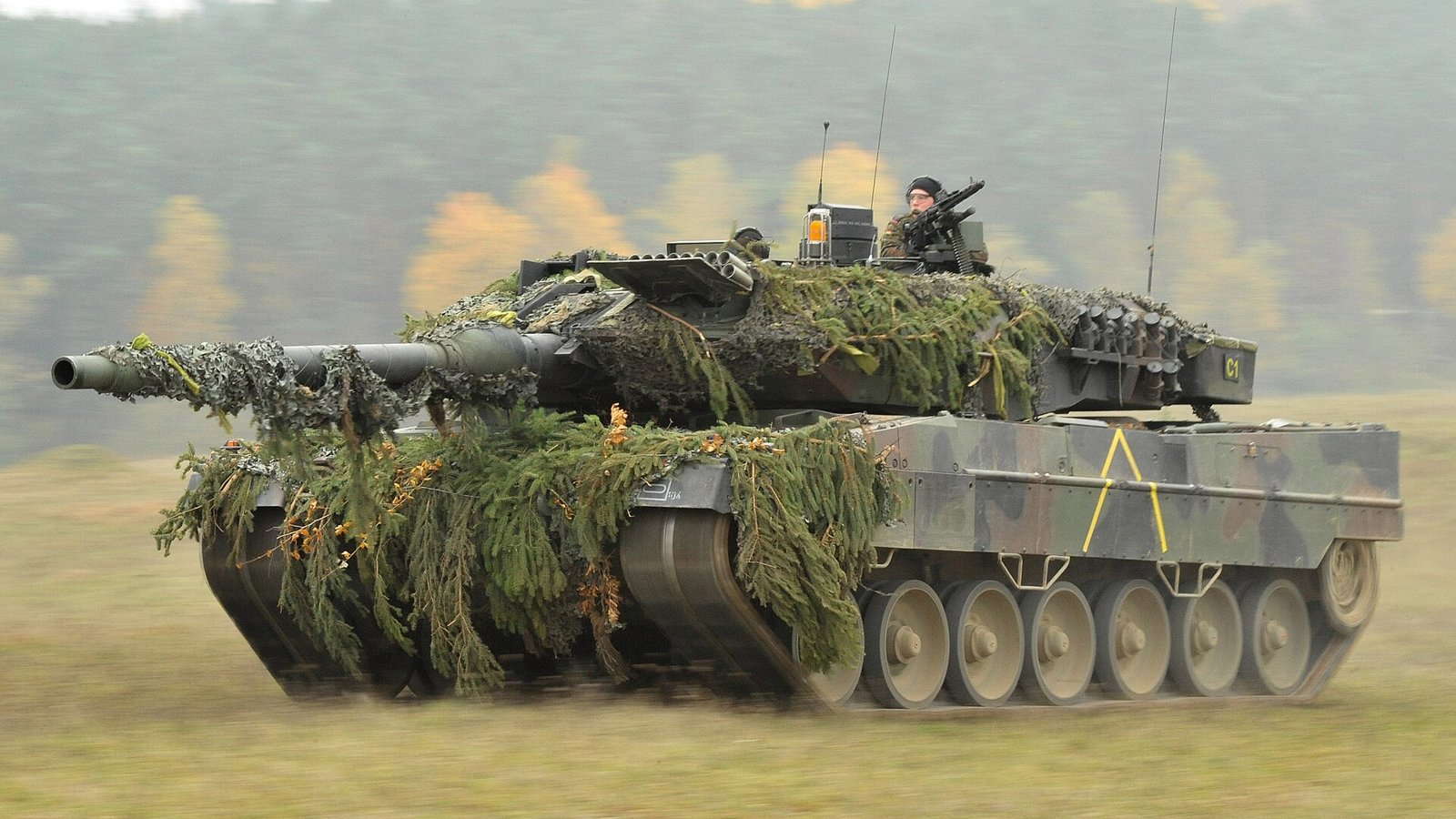
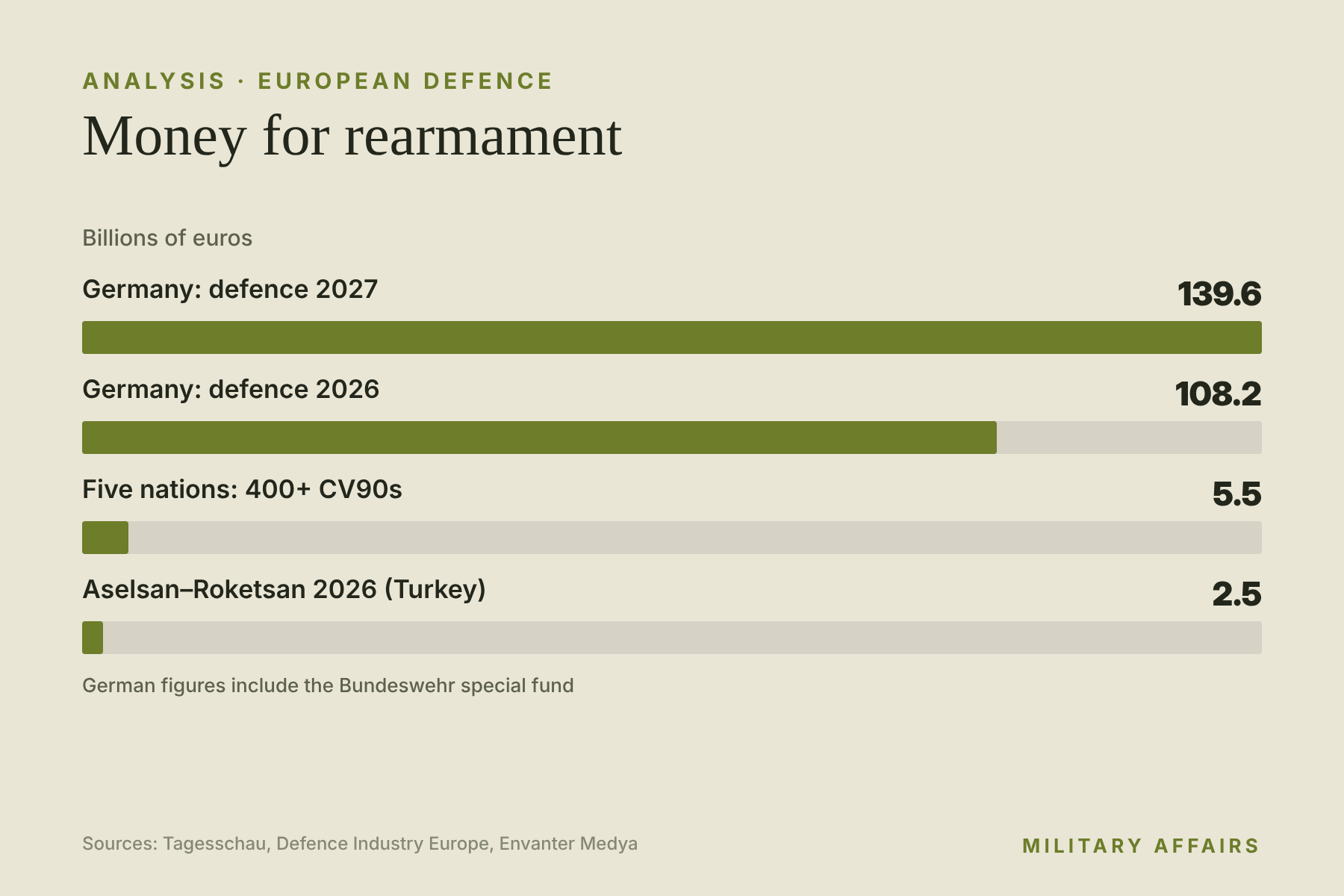
On November 27 the Bundestag passed the 2027 budget of €555.9bn by 317 votes to 260. The regular defence budget is €109.7bn, and with €29.9bn from the Bundeswehr special fund the total is €139.6bn, about €31bn more than this year and, according to The Local, a level not seen since the end of the Cold War. At the same time €123bn is financed through borrowing, the second-highest amount since World War II.
Chancellor Friedrich Merz said Germany is "more capable of defending itself now than it has been at any time in recent decades". But how it pays says more than the amount: a gap of about €34bn is plugged by a new tax on sugar-sweetened drinks and a higher tax on spirits, while transport gets about €2.55bn less, and health and development aid also face cuts.
Model 1: debt
The German model rests on the 2025 decision to exempt defence spending from the "debt brake". That gives Berlin fiscal room most European states lack, but also shifts the burden onto future budgets. The largest share of the budget, about €203bn or 36 percent, still goes to the labour ministry, which also funds pension insurance. Defence is thus financed not instead of the welfare state but alongside it, and on credit.
Model 2: joint procurement
The Nordic and Baltic states show a second way. Finland, Lithuania, the Netherlands, Norway and Sweden have awarded BAE Systems contracts worth a combined $6bn (€5.5bn) for more than 400 CV90 infantry fighting vehicles, all in the same CV9035 MkIV Nordic Edition configuration. Each country signs its own contract but under a common framework, and suppliers from all five take part in production.
The advantage is not only price. Identical vehicles mean crews can switch between them, spare parts arrive faster and training is cheaper. It is a practical answer to a problem that has plagued Europe for decades: too many types, too few production runs.
Model 3: export to survive
The third model is export-led, and Switzerland is the most interesting case. In a referendum on November 29 the Swiss decide on amendments that would allow deliveries to 36 partner countries, even those in armed conflict, and scrap the automatic requirement for buyers to seek permission to re-export. Supporters say the restrictions have pushed Swiss manufacturers out of the market: Germany excluded them from some procurement, and Denmark and the Netherlands suspended orders. Exports nonetheless rose 43 percent in 2025 to 948.2 million francs.
The same logic applies outside the EU. In November Turkey's Aselsan signed a €1.28bn contract with Roketsan for missile seekers and data links; with an earlier September contract that is about €2.5bn in two months. The aim is that the most sensitive missile parts do not depend on foreign, often export-controlled suppliers.
The limits of the industrial boom
Money does not solve everything. Rheinmetall may, according to chief executive Armin Papperger, abandon its shell plant in Ukraine because there is "no progress"; Ukraine meanwhile produces at least half of the 1 to 1.3 million shells it fires each year itself. Canada is keeping its place on the F-35 production line while Saab offers the Gripen with assembly in Canada. Buyers, in other words, increasingly ask not only what they buy but where it will be made.
A lesson for smaller states
According to the IISS, European defence spending rose 12.6 percent in real terms in 2025, and Russia's by three percent. For smaller states, including those in the Balkans, three lessons follow: joint procurement with partners cuts cost and eases maintenance; a domestic share of production is becoming a political condition, not a luxury; and a defence budget financed by debt or new taxes needs clear public support, because, as Germany's sugar tax and Switzerland's referendum show, the bill ultimately reaches citizens.
This analysis is based on reports by the sources listed. The result of the Swiss referendum was not known at the time of publication.
Sources and references
- I.TagesschauWer 2027 im Haushalt mehr Geld bekommt - und wer weniger🔗 https://www.tagesschau.de/inland/innenpolitik/haushalt-2027-ueberblick-102.html
- II.The Local GermanyBundestag passes Germany's federal budget for 2027🔗 https://www.thelocal.de/20261127/bundestag-passes-germanys-federal-budget-for-2027
- III.Defence Industry EuropeBAE Systems awarded $6 billion in contracts to supply more than 400 CV90s to five European countries🔗 https://defence-industry.eu/bae-systems-awarded-6-billion-in-contracts-to-supply-more-than-400-cv90s-to-five-european-countries/
- IV.Al JazeeraSwiss vote on easing arms export rules amid debate over neutrality🔗 https://www.aljazeera.com/news/2026/11/29/swiss-vote-on-easing-arms-export-rules-amid-debate-over-neutrality
- V.Envanter MedyaASELSAN Signs €1.28 Billion Deal With ROKETSAN for Missile Seekers and Data Links🔗 https://envantermedya.com/en/en-aselsan-roketsan-1-28-billion-missile-seekers/
- VI.Kyiv IndependentRheinmetall may drop plans to build ammunition plant in Ukraine, CEO says🔗 https://kyivindependent.com/rheinmetall-may-drop-plans-to-build-ammunition-plant-in-ukraine-ceo-says/
- VII.Defence Industry EuropeCanada reserves production slots for 18 more F-35 fighters🔗 https://defence-industry.eu/canada-reserves-production-slots-for-18-more-lockheed-martin-f-35-lightning-ii-fighters-during-88-jet-review-cbc/
- VIII.Al JazeeraRussia's hybrid war on Europe evolving but failing: IISS🔗 https://www.aljazeera.com/news/2026/11/27/russias-hybrid-war-on-europe-evolving-but-failing-iiss
Keep reading
Selected long reads to continue with.
 LONG READ
The race beneath the surface: the Indo-Pacific enters the age of nuclear submarines as Japan breaks its last taboo
 LONG READ
The drone has become ammunition: unmanned warfare moves from tactics to industry
 LONG READ
Hormuz, the Red Sea and the Baltic: how freedom of navigation became a spoil of war, and why oil is still getting cheaper
 LONG READ
Comments 0
No comments yet.